

– 2 hours ago

Only 17% of businesses in the Philippines have a roadmap for scaling artificial intelligence (AI), highlighting a gap between growing adoption of the technology and companies’ ability to integrate it more deeply into their operations.
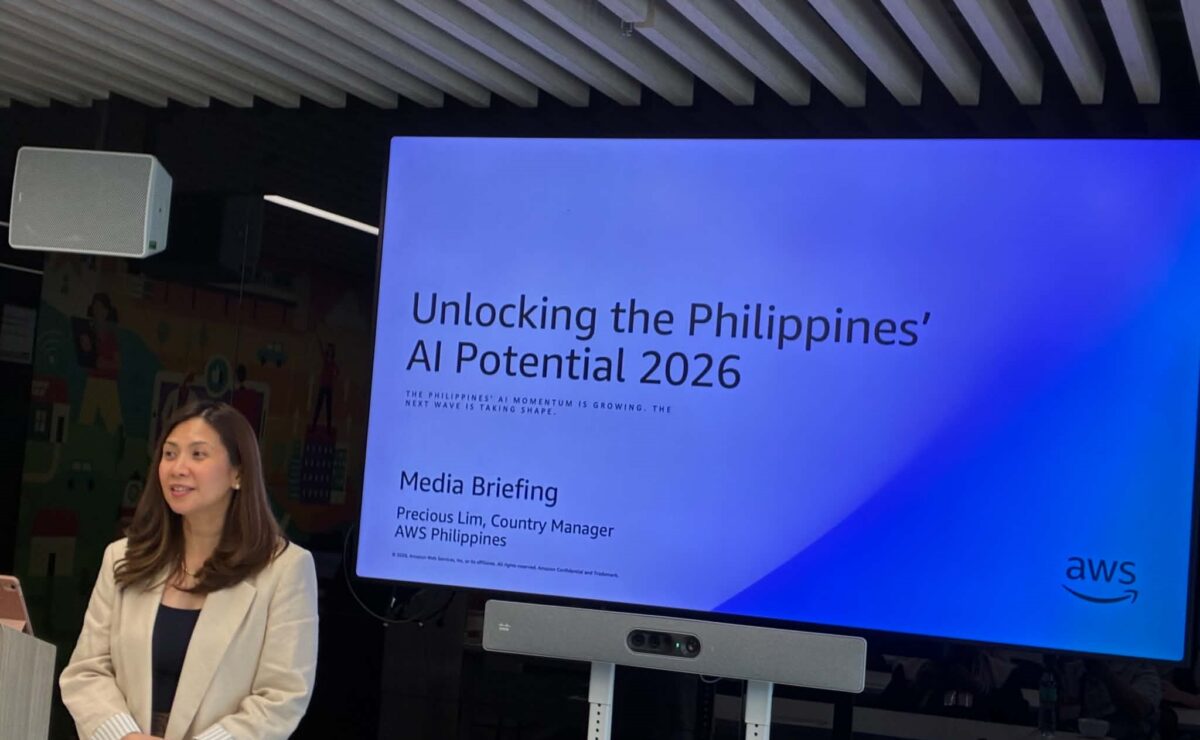
The finding comes from Unlocking the Philippines’ AI Potential 2026, a report commissioned by Amazon Web Services (AWS) and conducted by Strand Partners. The findings were presented by AWS Philippines Country Manager Precious Lim, who leads the company’s growth and strategic initiatives in the country, including efforts to accelerate cloud and AI adoption across industries.
The report found that 32% of Philippine businesses have adopte, up from 21% a year earlier, representing year-on-year growth of 52%. Another 57% said they were still exploring or experimenting with the technology. While adoption is increasing, only 6% of businesses said AI was fully integrated into their operations.
The results suggest that many organizations are still working out how to move beyond initial applications and make this new and growing technology a more established part of their business strategy.
Adoption is growing, but scaling remains a challenge
Among businesses that have adopted AI, most remain at the basic stage of implementation. The report classified 70% of adopters as basic users, while 18% had integrated AI across multiple business functions. Only 12% were using more advanced applications involving custom AI, multiple models, or agentic and autonomous systems, although this was an improvement from 8% in 2025.
Business leaders nevertheless expect the technology to become more important. Some 79% said they expect their usage to increase over the next 12 months, while 84% believe AI will significantly transform their industry within five years.
That outlook puts greater weight on whether businesses can develop the plans, skills, and internal processes needed to support wider deployment. Without a clear roadmap, companies may continue to experiment with AI without establishing how individual projects should be evaluated, integrated, and expanded.
Only 46% of businesses said they were confident in accurately measuring the return on investment from AI projects, while just 14% reported having a clearly defined success framework that was consistently applied.
The report also found that AI performance metrics do not always determine what happens to projects. For 31% of businesses, these metrics directly influence whether an AI initiative is scaled up or discontinued. Another 42% said metrics inform those decisions but are applied inconsistently, while 20% said the metrics rarely or never influence decisions.
These findings point to a problem beyond adoption itself. Businesses need ways to determine whether AI is delivering measurable value and to use that evidence when deciding where to invest further.
Skills and infrastructure remain obstacles
Workforce readiness is another concern as companies consider more advanced applications. Businesses estimated that only 31% of their employees were confident using advanced AI tools, while just 24% were confident in determining whether sensitive data could be processed by AI in compliance with relevant requirements.
The skills businesses expect to need are also changing. Respondents identified interpreting, validating, and challenging AI outputs as a priority, followed by supervising or orchestrating AI systems and ensuring responsible, compliant use.
These capabilities matter as organizations move from using AI for discrete tasks to incorporating it into broader workflows, where employees must assess its outputs and understand when human judgment is needed.
Readiness for the next generation of AI remains limited. Only 19% of businesses said they felt fully or very ready to adopt technologies such as agentic AI, which can carry out multistep tasks with greater autonomy. Among those that did not feel ready, 47% cited a shortage of AI and digital skills, 39% pointed to technical or data-related barriers, and 36% cited insufficient financial resources.
The findings indicate that Philippine businesses are becoming more receptive to AI, but adoption alone does not guarantee that they can deploy it effectively at scale. Developing a roadmap requires organizations to address the practical requirements of implementation, from workforce capabilities and data readiness to governance and the measurement of business outcomes.
For companies looking to move beyond experimentation, the next stage will depend on turning interest in AI into a structured approach to deployment, supported by the resources and expertise needed to sustain it.
