

October 21, 2025 | 9:16am
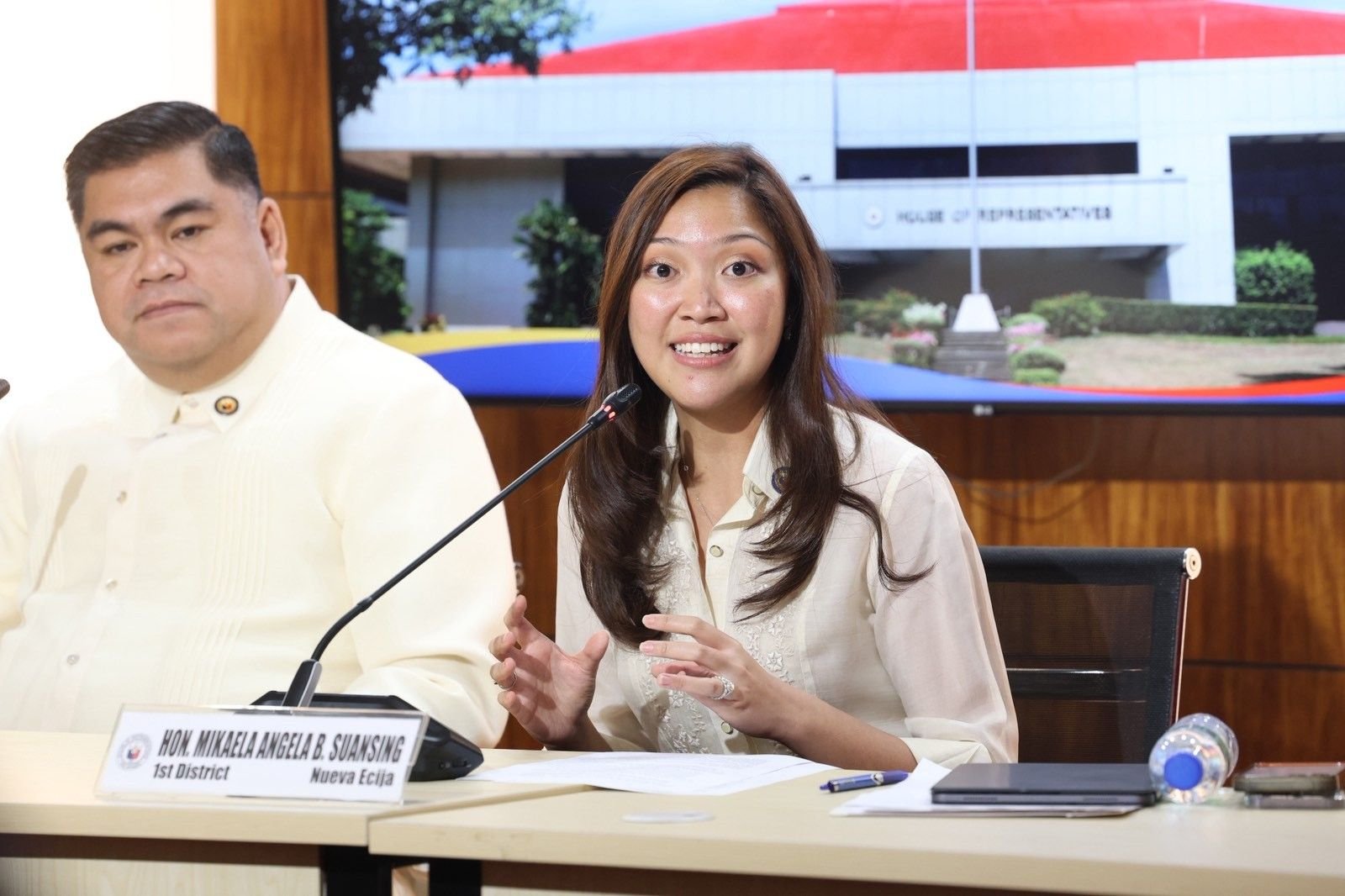
MANILA, Philippines (Updated 10:41 a.m.) — On paper, it looks like a massive P243-billion pot, but according to House appropriations chair Rep. Mikaela Suansing (Nueva Ecija, 1st District), the so-called unprogrammed appropriations are not part of the P6.793 trillion national budget in 2026 and cannot be used for infrastructure projects unless the government earns more than expected.
This isn’t necessarily new, but the House introduced one key change: infrastructure projects will no longer be covered by the standby funds.
Speaking at a press conference on October 20, Suansing stressed that since unprogrammed appropriations or “standby funds” are separate from the national budget, they are not exactly taken from taxpayers’ money.
The House approved a total of P243.2 billion in unprogrammed appropriations for 11 purposes, which cover various programs and benefits. It is roughly P120 billion less than the unprogrammed appropriations authorized for 2025.
“If you would want to look at it from a different lens, there is currently no funding for unprogrammed appropriations,” Suansing said. “No portion of our taxes from the P6.793 trillion goes to unprogrammed appropriations in the current form of the General Appropriations Bill.”
So just how are projects under the unprogrammed appropriations funded, and what purpose did the House approve the standby funds for?
If not tax, then what?
Under the House version of the 2026 General Appropriations Bill (HGAB), unprogrammed appropriations may only be tapped once non-tax revenues exceed projections or when new revenue streams are realized.
Non-tax sources include revenues from the Bureau of Treasury’s operations, such as interest on national government deposits, investment income, government service fees, certain charges to private firms, foreign grants and other royalties.
In some cases, such as foreign-assisted projects or budgetary support for government-owned and controlled corporations (GOCCs), funds may be released even without excess revenue — provided the projects are already backed by loan or grant agreements.
Meanwhile, priority programs that require excess or new revenue collections involve personnel benefits, social services, infrastructure projects, and the Philippine government’s agreed-upon partial funding of foreign-assisted projects.
“It means that if the government does not generate additional revenue, there will be nothing to fund the unprogrammed appropriations,” Suansing said in Filipino.
What about foreign-assisted projects?
The only infrastructure projects under the Department of Public Works and Highways and the Department of Transportation that are allowed to draw from unprogrammed appropriations are those co-financed by development partners. These include the Japan International Cooperation Agency, World Bank, Asian Development Bank and France’s Official Development Assistance.
“We need to retain the funding for FAPs because we cannot renege on our obligations and agreements to our development and international partners,” Suansing said.
About P133 billion, or 55% of the total standby funds, will go to such projects. These include the P32.9-billion Metro Manila Subway Phase 1, the P57.6-billion North-South Commuter Railway, the P14.9-billion Bataan-Cavite Interlink Bridge, and the P9.8-billion Laguna Lakeshore Road Network Project.
Education, social services top the list
As part of their so-called budget reforms, the House has decided to drop infrastructure projects that can be funded purely through local sources from the unprogrammed appropriations.
The rebranded “SAGIP,” now called the Strengthening Assistance for Social Programs, will instead give priority to social programs once there is excess government income.
Suansing said the Assistance to Individuals in Crisis Situations, or AICS, funded under the Department of Social Welfare and Development, may also be tapped during major disasters such as earthquakes and floods that displace thousands.
Senate pushback
While the House majority favors keeping the standby appropriations, the Senate is seeking to scrap the entire P243 billion from public spending in 2026, with possible retention only for foreign-assisted projects.
Senate President Tito Sotto and Finance Committee Chair Sen. Sherwin Gatchalian argued that the funds could have been a source of questionable “insertions.”
Suansing said she is open to a middle ground.
“I would be very happy to discuss this with the Senate. It doesn’t mean the House insists that the full P243 billion must remain intact,” she added.
