

December 26, 2025 | 11:43am
MANILA, Philippines — Barely months after its creation, the Independent Commission for Infrastructure (ICI) has been reduced to a single member following the resignation of two commissioners in December.
What does this mean for the Marcos administration’s promised pursuit of justice in the corruption-tainted flood control projects?
For minority lawmakers, this can only mean one thing — the end of the ICI.
“The ICI is a lost cause,” the Makabayan bloc said on Friday, December 26, raising questions about the commission’s credibility.
The three-member bloc said the resignations suggest the commission served more as a show of resolve than a genuine anti-corruption effort, as no “big fish” or high-ranking officials implicated in the corruption scandal have been held to account.
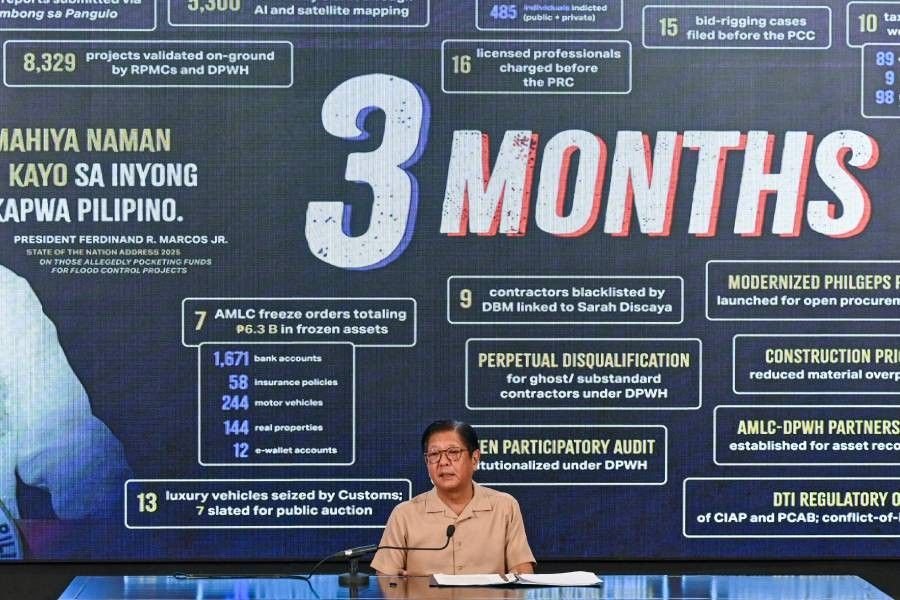
“Three months since its creation, it has unraveled and has exposed the empty anti-corruption rhetoric of the Marcos regime,” the group added.
Who resigned?
ICI Commissioner Rossana Fajardo announced her resignation on Friday, saying she had already “completed the work” she was tasked to accomplish when she was appointed to the position to strengthen financial oversight.
Not long before, Commissioner and former Public Works Secretary Rogelio “Babes” Singson stepped down on December 15, saying the demands of the investigative work had taken a toll on his health.
Certify bill arming ICI as urgent
Rep. Leila de Lima (ML Party-list) said the resignations have only strengthened her argument for a permanent oversight body as she renewed calls to pass the bill creating an Independent Commission Against Infrastructure Corruption (ICAIC) — a call echoed by Singson when he explained his resignation.
“Dapat kasi meron nang ICAIC by now (There should have been an ICAIC by now),” she added.
Rep. Perci Cendaña (Akbayan Party-list) shared the same sentiment, saying the lack of support and urgency in institutionalizing the independent body and granting it more teeth to investigate infrastructure anomalies is a “testament to a commission flawed at its core.”
Despite the lawmakers’ calls, the president has not certified House Bill 4453 and its Senate counterpart, Senate Bill 1215, as urgent. Both bills have already passed the committee level and are awaiting plenary debates for second reading.
All President Bongbong Marcos has done is direct Congress to “prioritize” the bill’s passage. House Speaker Bojie Dy also promised that the ICAIC bill will be approved on the third and final reading before Congress adjourns in December.
However, with lawmakers busy wrapping up the national budget for 2026, there doesn’t seem to be much time left for Congress to pass the ICAIC bill before the year ends.
What does this mean for Marcos?
For political scientist Cleve Arguelles, the weakened ICI only demonstrates the Marcos admin’s struggle to bridge the gap between reform promises and its willingness to follow through.
“The creation of bodies like the ICI raised public expectations that corruption would be addressed in a serious and institutional way,” he told Philstar.com in a message.
“When those bodies falter so quickly, it sends the signal that reform is being used more as a gesture than as a sincere commitment, and that inevitably weakens public trust in the Marcos administration,” he added.
Arguelles explained that an independent body like the ICI cannot function by mandate alone — it needs sustained political backing. And with Marcos’ own capital thinning, he said its ability to support the commission has also weakened.
“That inevitably affects their capacity to deliver on their important mission to credibly and sincerely investigate the flood control corruption scandal so government can regain public trust,” he added.
So what should Marcos do? The answer has been clear for months, according to Arguelles.
“The ICAIC has a stronger mandate and clearer powers, with more institutional teeth to go after corruption. That’s why certifying it as urgent could help reset the administration’s anti-corruption drive and give it a second wind,” he said.
