

MANILA, Philippines — As if its Two Stars from Michelin Guide, Two Diamonds from China’s Black Pearl Restaurant Guide, and other awards and accolades were not enough, Lai Ching Heen at Regent Hong Kong has been named as one of the La Liste World’s Best Restaurants in the Greater China Region, thus making it one of only 11 restaurants in Hong Kong that have achieved an outstanding score of over 90.
The La Liste recognition is an important achievement for Lai Ching Heen, considering that La Liste, which was founded in 2015, utilizes an advanced algorithm to analyze restaurant reviews from international dining guides, crowd-sourced platforms, and press reviews worldwide, ultimately ranking the Top 1,000 restaurants globally.
For its part, Lai Ching Heen proves itself to be deserving of its latest accolade. Backed by a celebrated legacy spanning four decades, it is renowned as one of the world’s finest Chinese restaurants specializing in Cantonese cuisine. It combines elegant interiors of jade-themed design elements, refined Cantonese dishes perfected over decades, the art of Chinese tea culture, excellent service, and iconic views of Victoria Harbour.
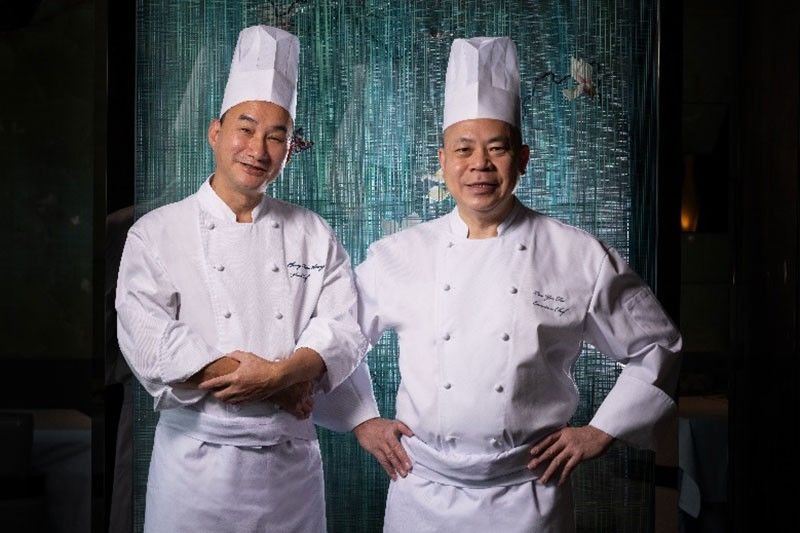
Responsible for the restaurant’s outstanding food offerings are the talented chef duo behind it — executive chef Lau Yiu-Fai and his head chef Cheng Man-Sang. Revitalizing the glory days of Cantonese cuisine while taking initiatives to expand Lai Ching Heen’s repertoire to a wider audience, the talented chef duo revitalizes the glory days of Cantonese cuisine while taking initiatives to expand its repertoire to a wider audience. They work closely with one another through thick and thin. Decades since they first collaborated, Chef Lau reminisces on his journey up the ranks through the turbulent times, while Chef Cheng continues to help catapult the restaurant’s standards to new heights.
“The most crucial element that makes a good chef isn’t talent, but the right attitude towards the food and service industry. One must develop high standards for himself before anything else. If you don’t demand excellence in what you do, how could you expect to execute excellence for your guests?” Chef Lau said.
Respecting the root of the dish
As times change and industry matures, so have technology and skills required to master the art of cooking. “It needs to fit the purpose. A blender is excellent in pulverizing dried codfish into powder. Yet diced carp remained better hand-chopped and beaten by hand to make a farce for poaching, ensuring the handy process yields a chewy texture that cannot be executed through blending into a puree,” the chef said.
He added: “Tools are meant to facilitate our work, but one must learn the purpose of doing something by hand, and why it is crucial to not rely only on technology. Like the conventional saying goes, it’s not about working fast, but working smart.”
Despite keeping his open mind for novelties, Chef Lau draws the line to stay true to certain principles.
“Sometimes if a guest’s preference affects how he or she experiences the dish, we may be able to accommodate or adapt, but if the change alters the soul or identity of the dish entirely, then we need to stick to the principles and respect the root of the dish,” Chef Lau explained.
According to him, being flexible is a great trait as a chef today, but flexibility cannot warrant altering the core of the dishes. Some principles exist and stand for a reason, and they do not deserve to be disregarded or disrespected.
But as much as Chef Lau tends to stick to the traditional way of doing things, he is open to making certain changes if need be.
Take Lai Ching Heen’s Peking Duck, which remains to be one of the restaurant’s iconic signature dishes. Inspired by a meal he took during a work trip in Japan many years ago, Chef Lau has shifted the presentation of the dish from the traditional pared skin with pancakes way of the Peking Duck to the more ornately fanned-out crispy skin, flour wrappers in steamer, and a more refreshing take on toppings, adding pineapple and green papaya alongside cucumber juliennes and a number of sauces to bring a different set of flavor profiles to the traditional dish. The new Peking Duck became an overnight sensation, and the dish has never been taken off the a la carte menu ever since.
More work to be done
Despite his success in the industry and the way he has steered Lai Ching Heen to what it is today, Chef Lau aims even higher.
“There is no doubt every working chef keeps aiming for more awards. These awards are not for me alone, but proof and honor that belongs to every member of the team. They are not there to create super stars but a galaxy full of shining stars that shine through every experience,” the chef said.
Chef Lau’s efforts are aimed even higher, as he aspires to promote Cantonese cuisine to a wider demographic and a younger generation of guests.
“The audience today for Cantonese cuisine is a different one compared to before. Aesthetics and presentation play a crucial part, but what stays true in the cuisine is the importance of temperature — food should always be piping hot when served — and everything we do upholds this tradition. It’s a standard we do not stray from, it’s a must, and we are happy to do it for our guests. We always warm up for smiles and satisfaction,” the chef said.
Generations of guests have visited Lai Ching Heen, and from the wave of return customers and feedback, Chef Lau is on the right track.
For his part, Chef Cheng has been fittingly considered as a jack of all trades in the traditional Chinese kitchen, one who excels in myriads of skills born out of his years of training.
While Chef Lau manages the dynamics and maintains the proper hierarchical structure of the kitchen at Lai Ching Heen, Chef Cheng keeps the chefs in line while executing the restaurant’s dishes with precision.
The duo also carries out group brainstorming sessions regularly, and new dishes are created as a result. Chef Cheng follows Chef Lau’s scientific approach — testing recipes by repeated trials, marking down findings on presentation, taste profiles, and aroma, among many attributes that build a dish, with the help of the entire kitchen team pitching in and working together to create every new dish or revisiting menu dishes that require updating from ingredient availability.
Lai Ching Heen belongs to the Regent Hong Kong, which includes The Steak House, Harbourside, Nobu Hong Kong, The Lobby Lounge, and Qura Bar.
RELATED: Consistency is key: Michelin Guide director explains selection process of inaugural PH list
