

Similar to how many politicians tackle key policies, the real reason is domestic
The Marcos administration on Tuesday, November 18, announced a “win for Philippine agriculture” and exports after US President Donald Trump signed a new executive order (EO) last week essentially reversing (though not fully) his reciprocal tariffs policy first announced in April 2025, meant to revitalize the US economy.
In the case of the Philippines, it was initially 17% and then 20% tariffs slapped on Philippine goods, later reduced to 19%. (READ Vantage Point: Can the Philippines endure economic pain with Trump’s tariff?)
According to the Palace, the new EO now allows more than $1 billion worth of mostly agricultural products of the Philippines — accounting for nearly half of the country’s US$14.5 billion exports to the US — to enter America duty free effective immediately.

These include its major agricultural exports to the US — various coconut products and byproducts (e.g. dessicated coconuts, crude coconut oil, coconut water), mangoes, bananas, processed pineapples — which had faced a higher tariff rate, making them more costly to American consumers.
One Philippine senior trade official attributed the policy reversal of Trump to the Philippines’ “patience” in dealing with the US, after many critics laughed at why other ASEAN countries, not even treaty allies, supposedly got better deals than the Philippines.
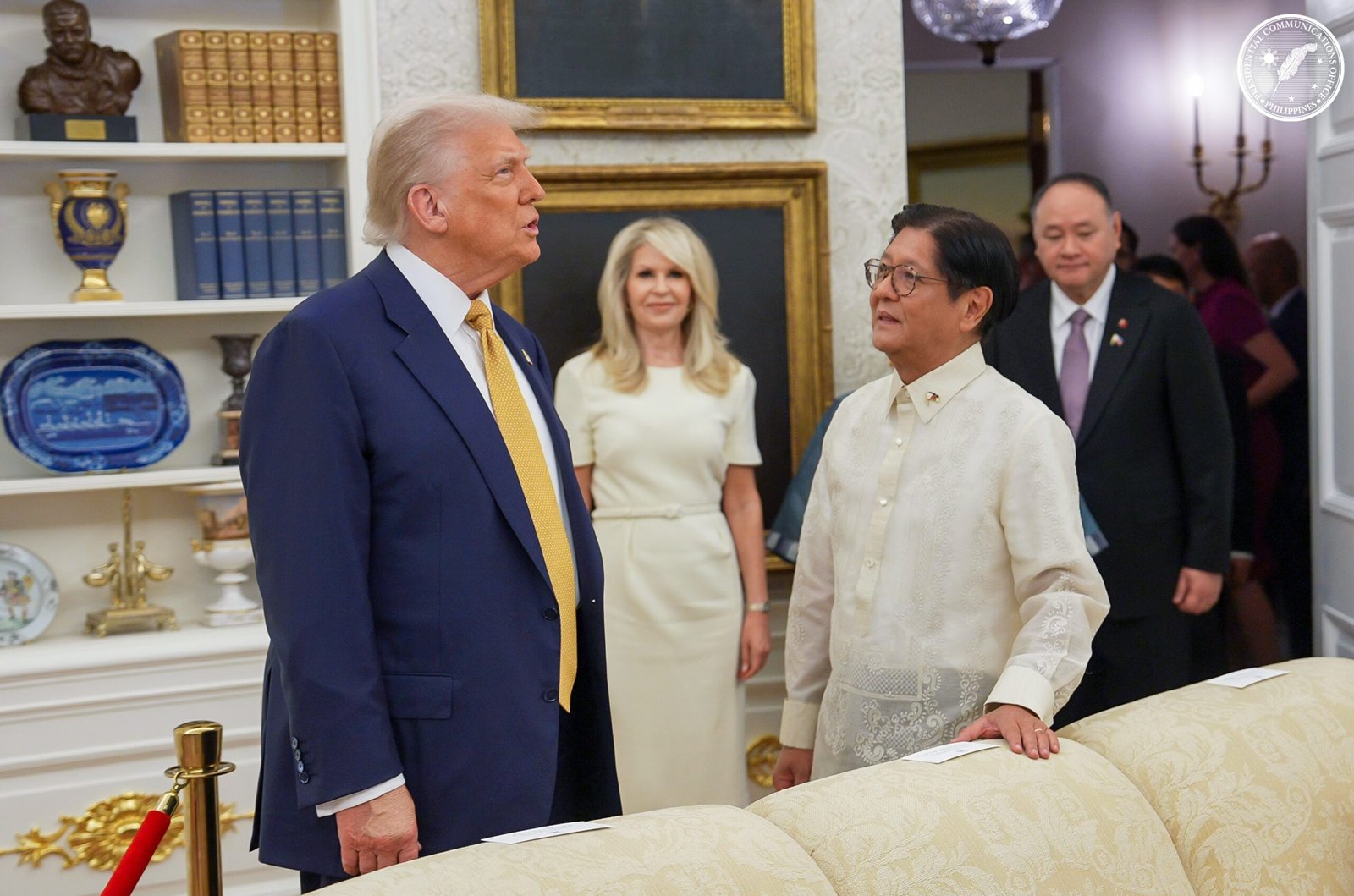
Recall that last July, when President Ferdinand Marcos Jr. went to the US to meet with Trump, they agreed to bring down the tariff on Philippine goods from 20% to 19%, a 1-point reduction panned by many.

At that time, Trump described Marcos as a “very tough negotiator…,” adding that “he loves your country.“
But what’s the more important — and perhaps underlying reason — why Trump signed his new EO?
The policy reversal, dated November 14, came 10 days after Democrats won three local races — in New York City, Virginia, and New Jersey. Reuters news agency described the losses as a “barometer of how Americans are responding to Trump’s tumultuous nine months in office.”

More importantly, the policy reversal comes in light of higher prices of select goods where Trump’s reciprocal tariffs have kicked in — and Americans feeling the impact on their pockets.
CNN, for instance, cites the case of bananas, imported mostly from South America. Americans are paying 8% more for their bananas, the news outfit reports. Other reports cite higher prices for what many Americans love: steak.
Which is why a number of American media outfits have linked the new Trump EO to US domestic politics and economy.
“Trump scraps tariffs on beef, coffee, tropical fruit in a push to lower prices,” says the NPR or National Public Radio.
“From McDonalds to Mortgages, Trump tries to reclaim affordability,” writes TIME Magazine.
“Trump administration prepares tariff exemptions in bid to lower food prices,” reports the New York Times.

Take note that in that EO, “Modifying the scope of the reciprocal tariff with respect to certain agricultural products,” and in the White House’s fact sheet about it, the Philippines isn’t even specifically mentioned since the policy reversal applies to many countries that export food to the US. In the White House’s fact sheet on the new EO, it talked about Trump’s trade deals with Malaysia, Cambodia, Thailand, and Vietnam.
The White House says these agricultural products that now have zero tariffs are “not grown in sufficient quantities in the US.” It says: “The President has thus determined that certain agricultural products shall no longer be subject to the reciprocal tariffs. Some of these products include:
- coffee and tea
- tropical fruits and fruit juices
- cocoa and spices
- bananas, oranges, and tomatoes
- beef
- additional fertilizers (some fertilizers have never been subject to the reciprocal tariffs).”
So, the underlying reason behind the Trump policy reversal is essentially domestic. And many have included this new EO as part of the US president’s “TACO,” a new acronym that takes a dig at Trump’s supposed decision-making process: Trump Always Chickens Out.
CNN, in its November 15 article on the policy reversal, says, “The latest TACO comes after voters, worried about affordability, gave Republicans a drubbing in recent off-year elections.”
Philippine officials now say they’ll be working on other items that are still covered by the 19% reciprocal tariffs such as garments, textiles, furniture, automotive products, etc. Hopefully, these will also be included in Trump’s TACO. – Rappler.com

