

November 2, 2025 | 12:00am
Wataru Tamura’s journey
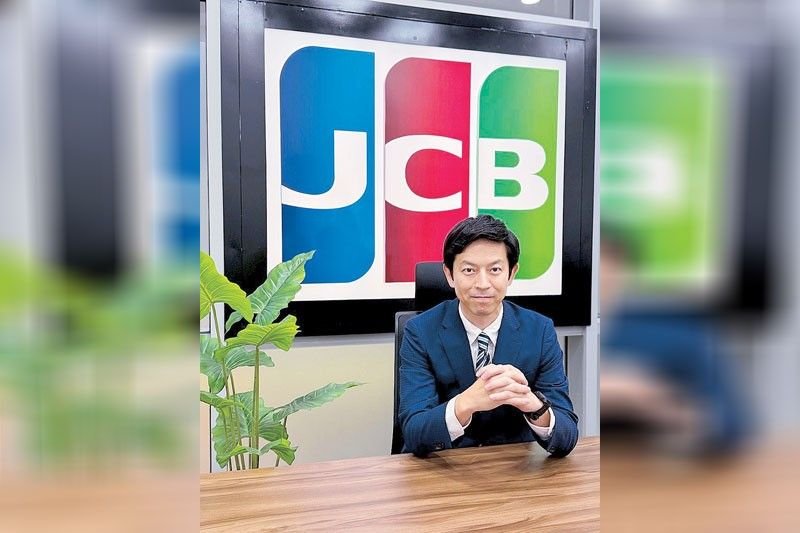
MANILA, Philippines — Career growth doesn’t always mean changing companies. For JCB country manager Wataru Tamura, staying with the same employer for 16 years has taken him further than he ever imagined.
He joined the international payment brand in 2007 and steadily built his career across different roles and countries. Today, he leads JCB Philippines, guiding the brand’s regional expansion and partnerships.
Growing up in Japan, Tamura once dreamed of becoming a professional baseball player. While that dream didn’t come true, the sport taught him the value of teamwork — how people with different strengths can come together to achieve something greater than themselves. It’s a lesson he still carries with him as he leads his team to new heights.
How did you choose to join JCB fresh out of college?
As I approached graduation, I was eager to pursue a career in an industry with significant growth potential. The credit card and payments sector stood out as a field that would continue to expand and evolve globally, shaping the way economies and societies operate.
Among the companies I explored, JCB left a particularly strong impression. As the only international payment brand based in Japan, JCB embodied both ambition and integrity — continuously challenging itself to compete on the global stage while remaining rooted in the values of trust, quality, and service that define Japanese business culture. The prospect of contributing to that global journey, and potentially working overseas, greatly appealed to me.
With an Economics degree, you began your career at the Communication Center Department. On paper, they seem to be different training and career paths.
My starting position in the Communication Center Department was focused on customer support and operational management. I was involved in handling cardmember inquiries and issues, which gave me direct, real-time insight into the customer experience. Although it may seem far from my economics background, the experience taught me how our services truly impact customers’ daily lives and how important it is to listen closely to their voices.
However, my role quickly expanded beyond basic support. I was also responsible for analyzing operational data to identify bottlenecks and areas for service improvement. Leveraging my economics background, I helped optimize communication flow and resource allocation within the center to enhance both efficiency and customer satisfaction.
From there, you moved next to Affiliated Company Business Promotion and then the Corporate Planning Department.
In Japan, it’s common practice to rotate employees through various departments to ensure they gain a holistic understanding of the entire business and develop comprehensive, integrated business skills.
In the Affiliated Company Business Promotion department, my primary focus was on strategic partnerships with regional banks in Japan. A key initiative was the sales and promotion of JCB Debit Cards to these regional banks.
The transition to the Corporate Planning Department was the next step in gaining a macro-level perspective. Here, I served as a leader in charge of company-wide budget management. After several years as the leader of budget planning, I was responsible for shaping JCB’s medium- to long-term corporate strategy. Critically, during this time, I also provided support to the Global Business Headquarters. It was through this connection and exposure to international operations that the seeds for my current global career path were sown.
When the world was recovering from the COVID-19 pandemic, you assumed an ASEAN role. What was exciting about this position?
Following the pandemic, JCB accelerated its efforts to strengthen its presence in overseas markets, and I was given the opportunity to take on a regional role overseeing the ASEAN area — particularly Singapore, Malaysia, Indonesia and the Philippines. This position allowed me to work closely with our local partners and offices across markets that were each unique in their culture, regulatory environment, and stage of digital payment development.
What excited me most about the role was the region’s dynamism. ASEAN countries were rebounding rapidly from the pandemic, with strong momentum in digital transformation and consumer spending. It was inspiring to witness firsthand how quickly these markets were evolving, and how JCB could contribute to that growth by providing secure, reliable, and locally relevant payment solutions.
As country manager of JCB Philippines, what are the opportunities you see in the market?
The Philippines is one of the most dynamic and promising markets in Southeast Asia. The country has maintained an impressive economic growth rate of around six percent in recent years, supported by a young, digitally savvy population and a rapidly expanding middle class. These conditions are creating strong momentum for consumer spending, financial inclusion, and digital transformation.
In the payments industry, opportunities are emerging on multiple fronts — particularly in credit card usage, e-commerce, and mobile payments. The government’s initiatives to promote cashless transactions are also accelerating the shift toward digital finance.
As Japan becomes increasingly popular as a tourist destination, how is JCB leveraging this to grow its brand and business?
Japan’s popularity as a tourist destination is an incredible tailwind for JCB, especially here in the Philippines. We are witnessing remarkable growth: Philippine travelers to Japan exceeded 820,000 in 2024, representing a significant increase of roughly 33.5 percent compared to the pre-pandemic levels of 2019. We anticipate further substantial growth in 2025.
We are leveraging this growth in two strategic ways. One, by enhancing the “Japan Experience.” Naturally, we are reinforcing JCB as the essential payment partner for traveling to Japan. This includes exclusive travel benefits, special discounts at major retailers, dining privileges, and access to services such as airport lounges, all of which substantially enhance the cardmember’s travel experience.
Two, by bringing Japan closer to Filipinos. To solidify our brand affinity, we are providing promotional services within the Philippines that make Japanese culture more accessible. We are actively partnering with Japanese-affiliated restaurants and retail stores in the Philippines to offer local deals and discounts.
Furthermore, the increasing influx of Japanese companies setting up operations in the Philippines is also accelerating our business expansion, creating a perfect ecosystem where JCB is positioned to support both local consumers and the growth of Japanese businesses in this dynamic ASEAN market. We view this as a mutually reinforcing relationship, supporting both the business community and Filipino consumers in enjoying the best of Japan through JCB.
Can you share JCB’s prospects in the Philippines?”
JCB began its licensed operations in the Philippines in 1996, and next year marks the 30th anniversary of our presence in the country — a truly meaningful milestone. Over the past few years, our business has achieved remarkable growth, supported by the Philippines’ solid economic performance and the healthy development of the credit card industry.
As we look ahead, we aim to build on this momentum by continuing to deliver the unique value that defines JCB. By offering meaningful and differentiated benefits to our customers, bank partners, merchants, and other stakeholders, we are confident that JCB can achieve even greater success. Our goal is to contribute not only to the growth of our partners and customers but also to the further advancement of the Philippine payment ecosystem as a whole.
Looking forward, we remain deeply committed to serving the Philippine market with integrity, innovation, and genuine partnership — creating value that endures and continues to earn the trust of our customers and business allies for many years to come.
